
Bale Silage – One Piece in the Grass Management Jigsaw
Dr David Lawrence, Head of Nutrition, Agritech
Following a turbulent start to the year from the perspective of weather, global politics, and their combined impact on production costs, the value of making high-quality silage has never been clearer. The temptation is to refill silage pits with as much bulk as possible, ensuring adequate forage reserves for the next long winter; however, we often end up back in the same position, where cows and beef cattle must be supplemented heavily to account for the loss in silage quality.
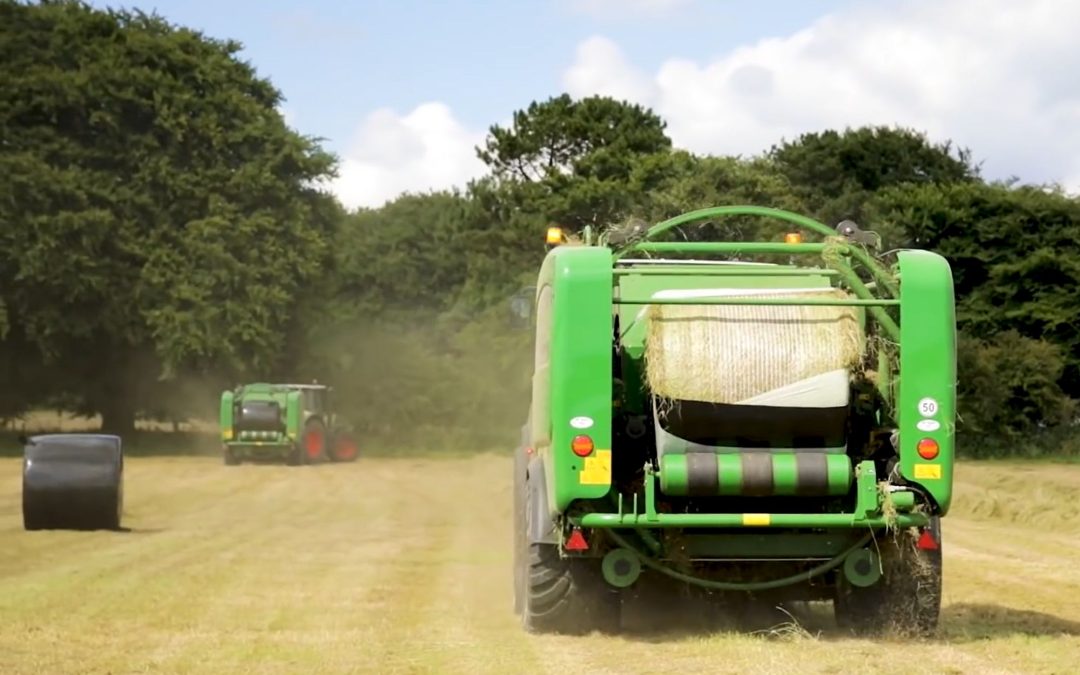
Surplus bale silage offers an opportunity to access high-quality forage during difficult grazing or growing conditions. For heavier farms that had a late start to the spring, many heavy covers have been grazed poorly or are at risk of being deferred into main crop silage. The smarter option is to take these out as high-quality bales, resulting in more ground remaining in your grazing rotation and reducing the risk of a grass deficit in the weeks to come. Should that grass deficit emerge, we have bales in the yard ready to be used.
Baling surplus grass is one step in the broader approach to maintaining high-quality grass in front of our cows and cattle. In recent years, with reduced mid-season growth rates or difficult grazing conditions during the shoulders of the season, bale silage may become a larger forage proportion of the animal’s diet at any stage of her lactation or production cycle.
Avoid dwelling on the decision to make bale silage. If you have surplus grass covers and graze-outs are poor, bales present two opportunities. The first is to improve the quality of the grass you are grazing, and the second is to improve the quality of the silage you have available. Deferring grass into heavier cuts presents two risks. The first is reducing the quality of both your silage and the grass available to cows or cattle, and the second is becoming tight on grass supply further down the line.
Cutting on time, with a cover between 2,000 and 2,400 kg DM/ha, should result in between 4 and 4.5 bales per acre of excellent-quality silage. Ideally, we wilt this grass to increase the dry matter (DM) to between 30% and 35%. Remember, the crop is light, and a few hours tedded out will do a lot of work to increase your DM in the right conditions.
The use of a silage additive has long been proven to improve fermentation and retain greater energy levels in high-quality forage. This presents an opportunity to achieve consistency in your surplus bale silage. Agritech’s GrasZyme Sugarboost is proven to:
- Increase ADG by 110g/head/day in beef situations
- Increase dry matter intakes by 0.4kg/head/day in dairy scenarios
- Result in milk protein percentage increases of 0.09%
For further information, contact your local Agritech Sales Advisor